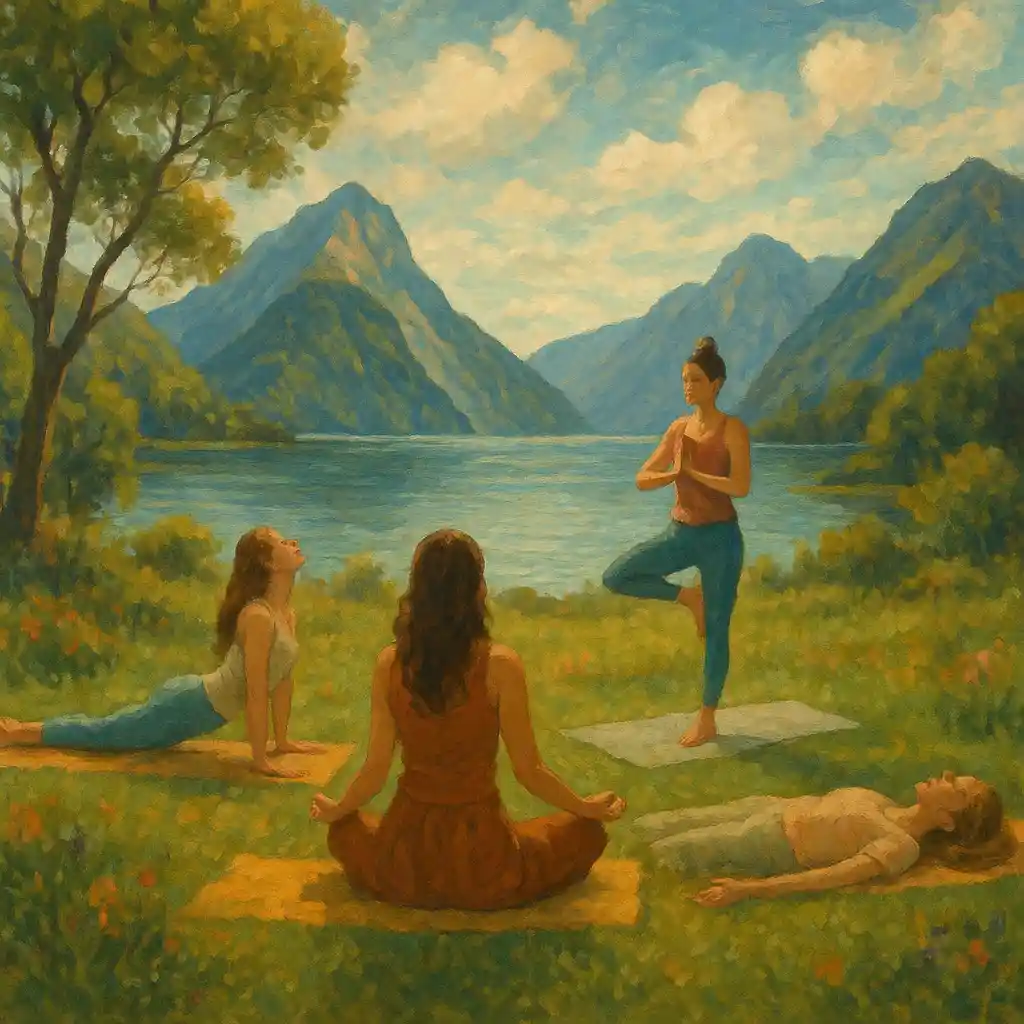
Life in midlife can feel full and heavy at the same time. Work, family, aging parents, community duties, and the constant news cycle can stack up. Even joyful things can become tiring when there is no space to rest. A wellness retreat is not an escape from real life. It is a return to yourself.
New Zealand offers a rare mix that supports this return: wide-open space, clean air, strong environmental values, and a culture that often treats nature with respect. When you pair this setting with simple yoga, mindful movement, healthy food, and quiet reflection, the result can feel deeply restorative.
Why New Zealand’s Natural Beauty Supports Real Rest
Some destinations entertain you. New Zealand tends to settle you.
1) The landscapes naturally invite a slower pace
From misty forests to calm lakes, from quiet beaches to mountain valleys, the scenery encourages you to pause. Many travelers notice that their breathing slows down without effort. When the environment feels safe and spacious, the nervous system often softens.
2) Nature is close, even when comfort matters
You do not have to “rough it” to be outdoors. Many wellness retreats and small lodges sit near trails, beaches, and gardens while still offering warm rooms, good food, and supportive staff.
3) Strong sustainability culture fits values-based travel
New Zealand is widely known for conservation work and eco-minded tourism. Many properties reduce waste, protect local wildlife, and support local communities. This matters when travel is also an expression of personal values.
4) Wellness options are abundant and varied
Yoga studios, retreat centers, hot pools, massage therapists, meditation teachers, and nature guides are available across both islands. Choices range from simple to luxurious, private to social.
In short, New Zealand’s Natural Beauty is not only a backdrop for photos. It becomes part of the healing experience.
Choosing the Right Retreat (Without Overthinking It)
The “best” retreat is the one that matches your needs and your energy.
Decide what you truly need most
Choose one primary intention and one secondary intention. Keeping it simple helps you pick the right program.
Common primary intentions
- Deep rest and stress relief
- Gentle movement and mobility
- Emotional reset after a hard season
- Grief support and quiet reflection
- Healthy habits and food reset
- Community and connection
Common secondary intentions
- Hiking and scenic walks
- Spa treatments and massage
- Mindfulness training
- Creative workshops (art, writing, weaving)
- Cultural learning and local food
Look for these retreat features
- Yoga style: Gentle, restorative, yin, chair yoga, or slow flow
- Daily schedule: Enough free time between activities
- Teacher training: Clear experience with midlife bodies and injuries
- Accessibility: Options for knees, hips, and lower back
- Food approach: Fresh, balanced, flexible with preferences
- Group size: Small groups often feel safer and more personal
- Location: Nature access that matches your mobility and comfort
A simple decision filter
If a retreat makes you feel pressured to “fix yourself,” skip it. If a retreat makes you feel supported, respected, and calm while reading the description, keep it on the list.
Packing Essentials: Comfort, Simplicity, and a Calm Mindset
Packing well is part of self-care. It lowers daily stress during the trip.
Clothing and gear
- 2–3 sets of comfortable activewear
- A warm layer (New Zealand weather can shift quickly)
- Light rain jacket or packable shell
- Walking shoes with good grip
- Sandals or slip-ons for indoor spaces
- Swimwear (for hot pools, beaches, spa areas)
- Simple daypack for water and layers
- Sun protection: hat, sunscreen, sunglasses
Wellness items that add real value
- A journal and pen
- Reusable water bottle
- Small pouch with any daily medications and basics
- Earplugs for lighter sleep
- A scarf or shawl for meditation and evenings
- Optional: a small essential oil roll-on (lavender is a classic)
A packing mindset shift that helps
Pack fewer “just in case” outfits and more “I will feel good in this” pieces. Comfort and easy layering beat over-planning.
Gentle Yoga for Relaxation and Stress Relief (Midlife-Friendly)
Yoga on retreat is not about achievement. It is about returning to your body with kindness. In New Zealand’s Natural Beauty, even simple movement can feel powerful.
A short, gentle sequence for calm (10–15 minutes)
Use this as a morning reset or an evening wind-down.
- Seated breathing (2 minutes) Sit comfortably. Relax your shoulders. Breathe in through the nose, out through the nose.
- Neck and shoulder release (2 minutes) Slow neck circles. Shoulder rolls. Gentle side stretches.
- Cat-cow (1–2 minutes) On hands and knees, move slowly. If wrists bother you, do it seated with hands on thighs.
- Child’s pose (1–2 minutes) Knees wide, hips back. Support with a folded towel or cushion if needed.
- Low lunge or supported hip opener (2 minutes each side) Keep it soft. Hands on blocks or a chair if balance is limited.
- Legs-up-the-wall (3–5 minutes) Excellent for swelling, circulation, and nervous system calm.
The goal is not flexibility. The goal is a quieter mind and a more settled body.
Breath practice that reduces tension fast
Box breathing (3–5 rounds)
- Inhale for 4
- Hold for 4
- Exhale for 4
- Hold for 4
This is simple, discreet, and helpful before flights, group activities, or bedtime.
Mindfulness and Meditation Without Pressure
Meditation does not need to be long to be effective. On retreat, consistency matters more than duration.
A realistic daily mindfulness plan
- Morning: 3 minutes of breathing before checking the phone
- Midday: 1 mindful walk, even if it is only 10 minutes
- Evening: 5 minutes of quiet sitting or a guided meditation
Mindful walking (especially beautiful in New Zealand)
While walking outdoors, place attention on:
- Footsteps and ground contact
- The feel of air on the skin
- Bird sounds and wind movement
- Natural colors and light changes
In New Zealand’s Natural Beauty, this practice often feels easy because nature provides so many gentle anchors for attention.
Wellness Activities in Nature: The “Outdoor Spa” Approach
Nature can be a form of medicine when you slow down enough to receive it.
Forest bathing in lush native forests
Forest bathing means spending time in a forest with full attention. It is not a workout.
How to do it
- Move slowly
- Pause often
- Touch tree bark gently
- Notice layers: roots, trunk, leaves, birds, sky
- Allow quiet, even if thoughts continue
This practice is especially calming in New Zealand’s green spaces, where the forests often feel old, soft, and protective.
Beach yoga for grounding
Practicing near water helps many people feel emotionally lighter.
A simple beach grounding moment
- Stand tall
- Feel feet in sand
- Inhale while lifting arms
- Exhale while lowering arms
- Repeat slowly 5 times
No need for a full class. A few mindful minutes can shift the whole day.
Hiking and scenic trails (gentle and steady)
Choose trails that match your body and mood. Some days call for movement. Other days call for rest.
Supportive hiking habits
- Start early for calmer trails
- Carry water and a layer
- Take photo breaks as real rest breaks
- Step down carefully; use trekking poles if helpful
- Keep the pace conversational and kind
The point is not distance. The point is letting New Zealand’s Natural Beauty refresh the mind through the body.
Nourishing Food: Farm-to-Table, Local Flavor, and Mindful Eating
Wellness travel is not about rigid rules. It is about steady, supportive choices.
Farm-to-table dining
New Zealand’s food culture often emphasizes freshness. Many retreat kitchens use local produce, simple proteins, and seasonal fruit.
A balanced retreat plate
- Half colorful vegetables
- One quarter protein (fish, eggs, tofu, beans, chicken)
- One quarter slow carbs (kumara, rice, quinoa, oats)
- Healthy fats (olive oil, avocado, seeds)
Local superfoods to try
- Kiwifruit: Vitamin-rich and easy to enjoy daily
- Manuka honey: Often used in teas and wellness recipes
- Green-lipped mussels: Known in many places as nutrient-dense
- Kumara (sweet potato): Comforting, steady energy
- Fresh berries and stone fruit: Seasonal and flavorful
Traditional Māori cuisine, approached with respect
When offered through cultural experiences, traditional foods can be part of learning and connection. Some meals may include methods like earth-oven cooking (hāngī) and ingredients tied to the land and community.
The most respectful approach is simple: listen, follow guidance, and appreciate the story and care behind the food.
Mindful eating tips that work
- Pause before the first bite
- Chew a little more slowly than usual
- Put the fork down between bites sometimes
- Notice taste, warmth, and texture
- Stop at “comfortably satisfied,” not overly full
Mindful eating tends to feel easier on retreat because there is less rushing and fewer distractions.
Connecting with Like-Minded Women (Without Forcing It)
Many women want community, but not constant social effort. A good retreat offers both connection and privacy.
Gentle ways to build meaningful connection
- Attend a group yoga class and speak to one person afterward
- Join a guided walk; nature reduces small talk pressure
- Sit with others at one meal per day, and keep other meals quiet if desired
- Share simple stories rather than deep life history right away
- Choose kindness over performance
Community helps healing because it reduces isolation. Even a few warm conversations can shift mood and confidence.
Inner Healing Practices: Journaling, Gratitude, and Small Rituals
Inner healing is not a single breakthrough moment. It is often a series of small, steady returns to self.
Journaling for self-reflection and emotional release
Keep journaling simple. Short entries are enough.
Journal prompts (written as statements to complete)
- “Right now, I feel…”
- “Today, my body needs…”
- “I am ready to release…”
- “I am learning that I can…”
- “One small thing I am proud of today is…”
- “A boundary I want to keep is…”
This style supports honesty without pressure.
A daily self-care routine that fits retreat life
- Morning: water + 3 minutes breathing + gentle stretch
- Midday: a quiet pause outdoors + a nourishing snack
- Evening: legs-up-the-wall + short journal entry + early bedtime
A simple routine helps you feel held by the day.
Gratitude and positive affirmations (without toxic positivity)
Gratitude is not denial. It is balance.
Examples of grounded affirmations
- “I can take one step at a time.”
- “Rest is productive for my health.”
- “My needs matter.”
- “I choose softness when I can.”
- “I trust myself to adjust.”
In the calm of New Zealand’s Natural Beauty, these statements often feel more believable.
Cultural Immersion and Respect: Traveling with Awareness
New Zealand is home to Māori, the Indigenous people of Aotearoa. Cultural respect adds depth to wellness travel.
Simple respectful actions
- Learn correct pronunciation of place names when possible
- Follow guidance at cultural sites and tours
- Keep sacred places quiet and clean
- Avoid touching carvings, objects, or spaces when told not to
- Support cultural experiences led by Māori guides
Respect is not about being perfect. It is about being careful, humble, and willing to learn.
Safety Tips for Solo Female Travelers
Solo travel can be empowering. It also works best with practical safety habits.
Core safety practices
- Share itinerary details with a trusted person
- Keep digital copies of passport and key documents
- Use reputable transport options and licensed tour companies
- Avoid isolated areas after dark, especially in unfamiliar towns
- Limit alcohol if alone, especially at night
- Keep hotel room secure; close and lock doors and windows
Boundaries and intuition
Treat discomfort as useful information. Leave situations that feel wrong. Say no without explanation. Choose calm over politeness when needed.
Staying connected
Create a simple check-in rhythm:
- A short message each morning or evening
- Location sharing during long drives or hikes
- A set time for calls every few days
This supports confidence without taking away independence.
Sustainable Travel Practices That Match Wellness Values
Wellness and sustainability fit together naturally. Caring for yourself and caring for the planet can be part of the same choice.
Lower-impact travel habits
- Pack light to reduce transport emissions
- Carry a reusable bottle and coffee cup
- Use reef-safe sunscreen when near water
- Choose walking, biking, and public transport when practical
- Stay longer in one region rather than rushing across the country
Support eco-friendly accommodations
Look for places that:
- Reduce plastic waste
- Use renewable energy or energy-saving systems
- Offer composting or recycling
- Support local conservation projects
- Hire locally and source local food
Support local businesses with care
- Eat at locally owned cafés and restaurants
- Buy crafts directly from makers when possible
- Choose tours that protect wildlife and respect habitats
- Follow “leave no trace” habits on trails and beaches
Sustainable choices often make travel feel more meaningful and aligned.
Bringing the Wellness Home: Keeping the Retreat Benefits Alive
The real value of a retreat shows up after returning home. The goal becomes carrying the feeling forward in small, realistic ways.
Integrate yoga and mindfulness into daily life
A simple home plan:
- 3 days a week: 10–20 minutes gentle yoga
- Daily: 2 minutes breathing before checking your phone
- Weekly: one longer walk in a park or near water
- Monthly: a personal “mini retreat” morning at home
Consistency beats intensity.
Create a small sacred space at home
No need for a full room.
A simple corner can include:
- A candle or soft lamp
- A cushion or folded blanket
- A journal and pen
- A calming photo from New Zealand
- A small reminder word: “Slow,” “Breathe,” “Enough”
This space trains the nervous system to relax more quickly over time.
Keep a “New Zealand mindset” list
Write a short list and keep it visible:
- Do one thing at a time
- Step outside daily
- Eat real food most of the time
- Speak kindly to yourself
- Choose rest earlier, not only after burnout
Many women find that New Zealand’s Natural Beauty becomes a symbol of spaciousness. The goal is building small moments of that spaciousness at home.
A Simple Sample Day on a Wellness Retreat in New Zealand
This example shows a balanced rhythm that supports both healing and enjoyment.
- Morning: warm drink, quiet breathing, gentle yoga
- Breakfast: fruit, oats or eggs, tea
- Mid-morning: guided walk or forest bathing
- Lunch: colorful vegetables, protein, steady carbs
- Afternoon: free time, massage, journaling, or a nap
- Late afternoon: restorative yoga or stretching
- Evening: nourishing dinner, gratitude notes, early wind-down
- Night: legs-up-the-wall, lights low, sleep
This kind of day feels simple. That simplicity is often what creates deep restoration.
Closing: Let New Zealand’s Natural Beauty Do Part of the Work
A wellness retreat does not require a new personality or a strict routine. It asks for willingness to slow down, to listen, and to receive support. New Zealand makes that easier. The air feels clean. The land feels open. The scenery invites quiet. The culture of sustainability and respect can reinforce values-based travel choices.
When yoga and mindfulness meet New Zealand’s Natural Beauty, the experience often becomes more than a vacation. It becomes a reset. A reminder that caring for yourself is not extra. It is essential.
Take what works, leave what does not, and keep it gentle. The most powerful wellness practice is the one you can actually live with—on the road and at home.