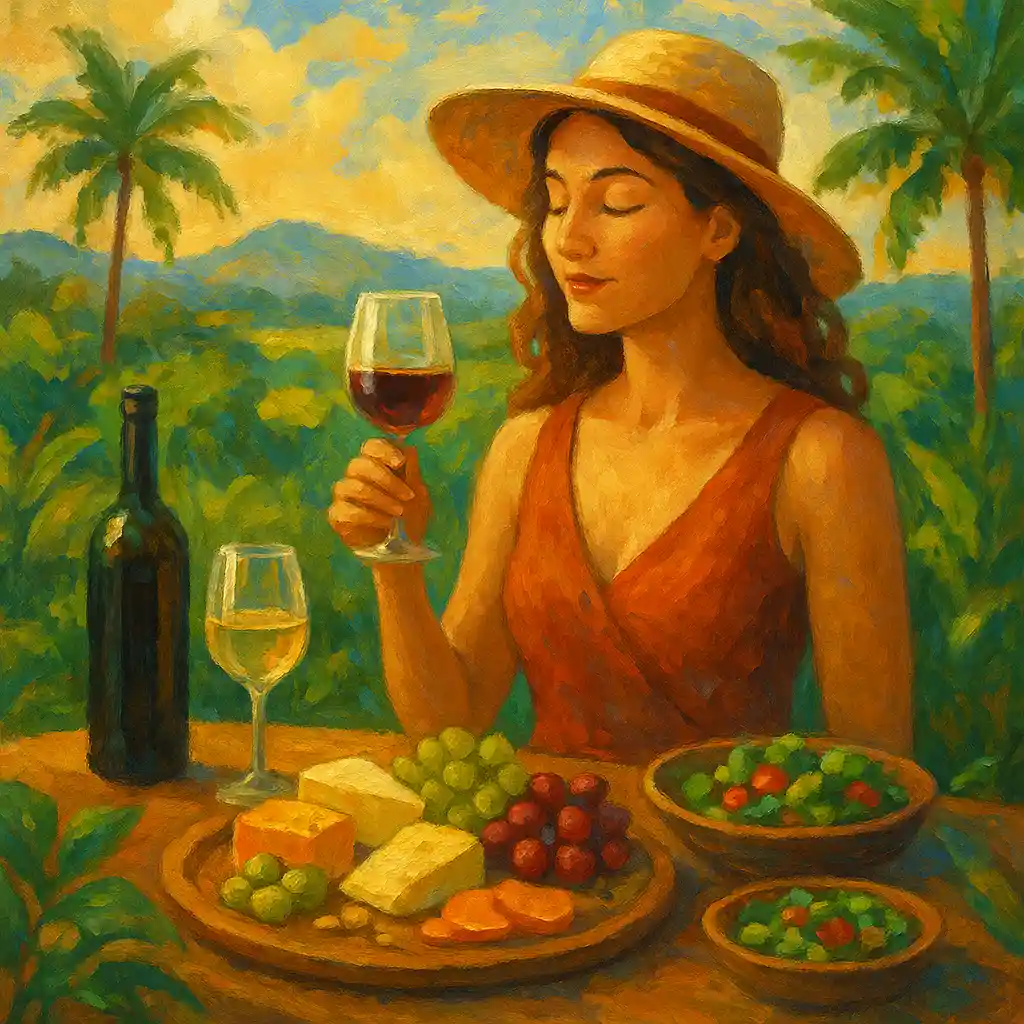
Food and wine tasting tips in Costa Rica can turn a simple trip into a deep wellness experience. Imagine warm sun on your skin, rainforest sounds in the background, and a fresh plate of local food in front of you. When you slow down and taste with attention, you don’t just eat—you connect with the land, the culture, and your own body. Costa Rica is a wonderful place for women who want to travel with purpose, feel grounded, and enjoy beautiful flavors while making mindful choices.
This guide brings together practical, easy-to-follow food and wine tasting tips in Costa Rica for wellness-seeking women (especially if you love comfort, balance, and meaningful experiences). You will learn how to plan your tastings, support sustainable and ethical places, stay safe, and bring the “pura vida” feeling home with you.
Every meal in Costa Rica can be a wellness practice: slow down, choose thoughtfully, and savor what the country offers—one bite and one sip at a time.
Understanding Costa Rican Cuisine and Wine Culture Before You Taste
One of the best food and wine tasting tips in Costa Rica is to learn a little about what you are tasting. When you understand the story behind a dish or a drink, the experience becomes richer. Costa Rican cuisine is strongly connected to everyday life, local farms, and simple ingredients prepared with care.
Traditional dishes and ingredients to know
As you explore restaurants, markets, and small family-run spots, you will see some dishes again and again. Trying them in different places helps you notice small changes in flavor and style.
- Gallo pinto: a traditional mix of rice and beans, often eaten at breakfast. It is filling and energizing—great for active travel days.
- Casado: a hearty plate that often includes rice, beans, plantains, salad, and your choice of protein. It is a simple way to taste several local staples at once.
- Lizano sauce: a popular local sauce with a distinct flavor that many people add to rice, beans, and other dishes.
- Agua de sapo: a ginger drink that can feel refreshing, especially in warm weather.
- Fresh tropical fruits: you may find mango, guava, and many other fruits in markets and on menus.
If you want to keep your energy steady during tastings, these traditional meals can be a helpful base. They are also a direct way to experience Costa Rican daily culture.
A simple introduction to Costa Rican wine tasting
Wine culture in Costa Rica may feel like a hidden gem during your trip. The draft mentions wine regions such as the Central Valley (with volcanic soils) and Guanacaste (with a tropical climate). You may also see popular varietals mentioned, including Sauvignon Blanc, Malbec, and Carmenere.
A great starting point is to try a guided tasting where you can learn about the winemaking process and sample different styles side by side. This helps you build confidence in what you like, even if you do not consider yourself a wine expert.
Food and Wine Tasting Tips in Costa Rica: Choose Sustainable and Ethical Experiences
If wellness is part of your travel style, sustainability matters. Another key set of food and wine tasting tips in Costa Rica is about choosing experiences that support the environment and local communities. These choices can also improve taste and freshness, because local ingredients often travel less and arrive at your plate in better condition.
Why supporting local producers matters
Supporting local, sustainable food and wine producers is a simple action with a real impact. It can help preserve traditional farming practices, support the local economy, and reduce carbon footprint. It also tends to lead to higher-quality ingredients—fresh produce, carefully made drinks, and meals that reflect the region.
When you can, look for:
- Farm-to-table restaurants that focus on seasonal, local ingredients
- Farmers’ markets where you can meet growers and see what is in season
- Local artisans and small producers who take pride in their craft
How to identify eco-friendly and socially responsible places
You do not need to be perfect. The goal is to make better choices when you can. Use these practical signs to guide you during your trip:
- Look for certifications such as Rainforest Alliance or Fair Trade.
- Ask if ingredients are sourced locally to support the community and reduce transportation impact.
- Notice waste practices: do they compost, recycle, or reduce food waste?
- Watch for single-use plastics and choose places that offer better alternatives.
- Pay attention to fair labor practices: respectful service often reflects respectful working conditions.
- Choose farm-to-table options when available for fresh, often more wholesome meals.
- Support businesses that give back to local charities or environmental initiatives when you see this clearly expressed.
When you spend money at places that care for the land and people, your food and wine tasting tips in Costa Rica become part of a bigger wellness story.
Food and Wine Tasting Tips in Costa Rica for Planning a Balanced Itinerary
Planning helps you enjoy more and stress less. One of the most useful food and wine tasting tips in Costa Rica is to create a flexible plan: enough structure to find the best experiences, but enough space for surprise discoveries.
Research authentic experiences without overplanning
Start with a short list of experiences you truly want. Consider including:
- Local markets and street food stalls for traditional dishes
- Farm-to-table restaurants for fresh, seasonal meals
- A wine tasting session to learn about varietals and local styles
- A cooking class for hands-on cultural learning
If you like journaling, write down a few food memories from past trips and what made them special. This can help you choose experiences that match your values: connection, calm, and quality.
Create variety: light, hearty, and everything in between
Wellness travel is not only about “healthy” food. It is also about balance. Try to mix different types of meals and settings:
- A simple breakfast like gallo pinto and coffee before an active day
- A long, relaxed lunch where you can taste slowly
- A market visit where you snack on fruit and talk to vendors
- A special dinner with thoughtful food and wine pairing
Try this simple challenge: taste at least one new dish each day. It keeps your trip exciting and helps you expand your palate without pressure.
Engaging with Local Communities During Food and Wine Tasting in Costa Rica
Some of the most meaningful food and wine tasting tips in Costa Rica are not about what is on the plate, but who you meet along the way. When you engage respectfully, you learn more, feel more welcome, and often find the best local recommendations.
Ways to interact respectfully with locals during tastings
Respectful connection can be simple and natural. During tastings, tours, and market visits:
- Greet people warmly with a friendly “Hola” and a smile.
- Ask questions about ingredients, preparation, and traditions.
- Practice active listening when someone shares a story about a dish or wine.
- Offer sincere compliments when you enjoy something.
- Be open to trying flavors that are new to you.
- Remember to say “Gracias” and show appreciation for hospitality.
These small actions can turn a tasting into a cultural exchange, not just a transaction.
Support community-based food and wine initiatives
Community-based initiatives can include local markets, social enterprises, and projects that empower residents and protect cultural heritage. When you choose these experiences, your trip supports more than your own enjoyment—it supports local well-being.
Try this: when you meet a farmer, chef, or winemaker, ask a simple question like, “What makes this product special here?” The answer often gives you a deeper story to remember.
Mindful Eating: Food and Wine Tasting Tips in Costa Rica for Presence and Pleasure
Mindful eating is one of the most powerful food and wine tasting tips in Costa Rica because it supports both wellness and enjoyment. When you slow down, you often eat less, taste more, and feel better afterward.
How to savor flavors mindfully
Use your senses on purpose. Before you take the first bite or sip:
- Pause and take one deep breath.
- Notice the colors and textures on the plate.
- Smell the food or wine before tasting.
- Take a small bite and chew slowly.
- Try to identify flavors (sweet, salty, sour, bitter) and textures (crisp, creamy, juicy).
This practice also helps you appreciate cultural significance. Many dishes reflect local history, family traditions, and what grows well in the region.
Practice moderation and balance during tastings
It is easy to overdo it when everything looks delicious. Moderation does not mean you miss out—it means you can enjoy more days of your trip feeling strong and comfortable.
Helpful strategies include:
- Start with small portions and return for more only if you truly want it.
- Take breaks between tastings to reset your palate.
- Alternate sips of wine with water.
- Check in with your body: are you still hungry, or just excited?
Balance is part of wellness: you can indulge and still stay connected to what your body needs.
Health and Wellness Considerations for Food and Wine Tasting in Costa Rica
Wellness travel works best when it is realistic. These food and wine tasting tips in Costa Rica can help you feel good during busy days, warm weather, and rich meals.
Choose nutritious and wholesome options during tastings
When you arrive at a tasting or a buffet-style meal, scan the options first. Then choose what truly interests you. This simple pause can prevent mindless eating.
To support your wellness goals:
- Choose dishes with fresh, local ingredients when possible.
- Add fruits and vegetables where you can.
- Enjoy traditional meals like casado as a balanced plate option.
- Focus on quality over quantity—taste what feels special.
Stay hydrated and prioritize self-care
Costa Rica’s climate can be warm, and tastings can be dehydrating—especially if you are walking a lot or drinking wine.
- Carry a reusable water bottle to drink regularly and reduce plastic waste.
- Consider setting a reminder to drink water every hour, especially on active days.
- Include hydrating foods like watermelon, cucumbers, and oranges when available.
- Take short breaks for deep breathing to stay grounded and present.
Also remember the basics that support any wellness trip: restful sleep, gentle movement, and moments of quiet—whether that is a mindful walk, a beach meditation, or a slow morning coffee.
Food and Wine Pairing Techniques: Food and Wine Tasting Tips in Costa Rica That Elevate Every Meal
Pairing food and wine can feel intimidating, but it does not need to be. These food and wine tasting tips in Costa Rica are simple guidelines to help you enjoy better combinations and learn what you personally love.
Basic pairing principles to remember
- Match intensity: light dishes with light wines, heavier dishes with bolder wines.
- Balance flavors: spicy food can pair well with a slightly sweet wine.
- Use acidity: acidity in wine can cut through rich foods and make the meal feel more balanced.
- Consider local pairing: pairing local dishes with local wines can make the experience feel more authentic.
Pair Costa Rican dishes with local varietals
The draft mentions that dishes like gallo pinto or casado can pair beautifully with local wines such as Sauvignon Blanc or Carmenere. Use this as a starting point, then adjust based on your tastes.
Try this: during a meal, take one bite of food first, then one sip of wine. Notice what changes—does the food taste brighter, richer, or smoother? This is one of the easiest ways to learn pairing without any pressure.
Experiment with unexpected pairings
Not every great pairing follows strict rules. Sometimes the most memorable moments come from curiosity. For example, you might enjoy:
- A zesty ceviche with a refreshing drink like coconut water
- A spicy salsa with a cooling side like cucumber salad
When you experiment, keep it playful. Your goal is not to be “correct”—it is to discover what makes you feel happy and satisfied.
Navigating Dietary Restrictions and Allergies: Food and Wine Tasting Tips in Costa Rica for Peace of Mind
If you have dietary restrictions or allergies, you can still enjoy amazing food and wine tasting tips in Costa Rica. The key is preparation and clear communication. When you feel safe, you can relax and truly taste.
Communicate dietary needs effectively
Before your trip, research traditional dishes and common ingredients. This helps you spot safe options more quickly. During tastings or at restaurants:
- Ask what ingredients are used and how the dish is prepared.
- Request simple modifications when possible.
- Be clear, calm, and kind—most staff will want to help.
Try this: carry a small card with your dietary preferences or restrictions written in Spanish. It can make communication easier in busy moments.
Seek alternative options and stay open to local ingredients
Dietary needs can also lead you to new discoveries. Costa Rica offers many plant-based and naturally gluten-free foods, depending on what you need. You can explore ingredients like:
- Plantains
- Yuca
- Heart of palm
- Fresh tropical fruits
If you like to plan, pack a few safe snacks or supplements for long travel days. This can reduce stress and help you enjoy tastings with more freedom.
Safety Tips for Food and Wine Exploration in Costa Rica
Safety is part of wellness. These food and wine tasting tips in Costa Rica focus on staying comfortable, avoiding common problems, and keeping your experience positive from start to finish.
Check hygiene standards at tasting venues
Before booking, do a quick search for reviews that mention cleanliness. When you arrive, take a moment to notice the environment:
- Are tables and utensils clean?
- Does the staff handle food and drinks in a hygienic way?
- Does the overall space feel well cared for?
It is okay to trust your instincts. If something feels off, choose another place.
Be cautious with alcohol and stay aware of your surroundings
Wine tastings are enjoyable, but it is important to pace yourself. A few simple habits can help:
- Set a personal limit before you start drinking and stick to it.
- Alternate alcoholic drinks with water to stay hydrated.
- Never leave your drink unattended.
- Plan transportation in advance if you expect to drink.
Remember: it is always okay to say no to another round. The goal is to feel good, not pressured.
Bringing It Home: Food and Wine Tasting Tips in Costa Rica You Can Use in Your Own Kitchen
One of the best parts of travel is letting it change your everyday life in small, lasting ways. These food and wine tasting tips in Costa Rica do not have to end when your trip ends.
Recreate Costa Rican tastings at home
If you return home missing the flavors, start simple. Stock a few staple ingredients and recreate easy dishes:
- Make gallo pinto for a comforting breakfast.
- Try a refreshing ceviche style lunch if it fits your diet and preferences.
- Serve fresh tropical fruit as a snack or dessert.
To bring back the tasting experience, pair your meal with a wine you enjoyed on the trip, such as Sauvignon Blanc, Malbec, or Carmenere, and practice the same mindful steps: pause, smell, taste slowly, and notice what you feel.
Source ingredients and keep the memory alive
If you can, shop locally at home the way you did in Costa Rica. Choose seasonal produce, visit farmers’ markets, and look for ethically made products. Even if the ingredients are not the same, the values can be.
Try this: host a small “Costa Rica night” with friends. Cook one traditional-inspired dish, pour a wine you enjoy, and share stories from your trip. This turns your memories into connection.
Cultivating Lasting Memories and Personal Growth Through Food and Wine Tasting in Costa Rica
Food experiences can be surprisingly transformative, especially when you travel with intention. Many wellness-seeking women find that the best memories come from simple moments: a conversation at a market stall, a new fruit tasted for the first time, or a meal enjoyed slowly in nature.
Reflect on what the journey gave you
Consider keeping a food journal during your trip. Write down:
- What you ate and drank
- Where you tasted it
- How it made you feel physically and emotionally
- Any story you learned from a chef, farmer, or local guide
This helps you remember more than flavors—it helps you remember meaning.
Bring the lessons into everyday wellness
When you return home, you can keep the “pura vida” mindset alive in practical ways:
- Start your day with a short gratitude practice.
- Practice mindful eating for one meal a day.
- Spend time in nature, even if it is a small park or your garden.
- Support sustainable choices by shopping locally and reducing waste.
- Stay curious: read, cook, and keep learning about the culture that inspired you.
The real souvenir is not a bottle of wine or a recipe—it is the calmer, more present way you learn to enjoy life.
Your Ultimate List: 10 Food and Wine Tasting Tips in Costa Rica for Wellness-Seeking Women
To make everything easy to remember, here is a clear list you can save for your trip. These food and wine tasting tips in Costa Rica focus on wellness, sustainability, and meaningful travel.
- Start each day with intention: take a mindful walk, breathe deeply, and set a positive focus for the day.
- Try traditional dishes early: begin with gallo pinto and casado to understand local flavors and fuel your adventures.
- Choose farm-to-table when possible: prioritize fresh, locally sourced meals that support local farmers.
- Visit farmers’ markets: taste seasonal produce, meet local growers, and learn what is truly local.
- Look for eco-friendly signs: certifications (Rainforest Alliance, Fair Trade), local sourcing, and reduced plastic use.
- Engage with locals respectfully: ask questions, listen to stories, and say “Gracias” with genuine appreciation.
- Practice mindful tasting: slow down, smell first, take small bites, and notice flavors, textures, and feelings.
- Keep balance with wine: pace yourself, alternate with water, and plan safe transportation.
- Plan for dietary needs: research dishes, communicate clearly, and carry a Spanish dietary card if helpful.
- Capture the memories: keep a food journal and note what you want to bring into your everyday life at home.
Conclusion
With the right food and wine tasting tips in Costa Rica, your trip can feel nourishing, joyful, and deeply connected to nature and culture. Choose sustainable places, taste mindfully, stay hydrated, and let each meal teach you something new. When you return home, keep the experience alive through simple recipes, mindful eating, and values-based choices. If you’re planning your next getaway, explore more guides on our site to build a wellness-focused Costa Rica itinerary that fits your travel style.