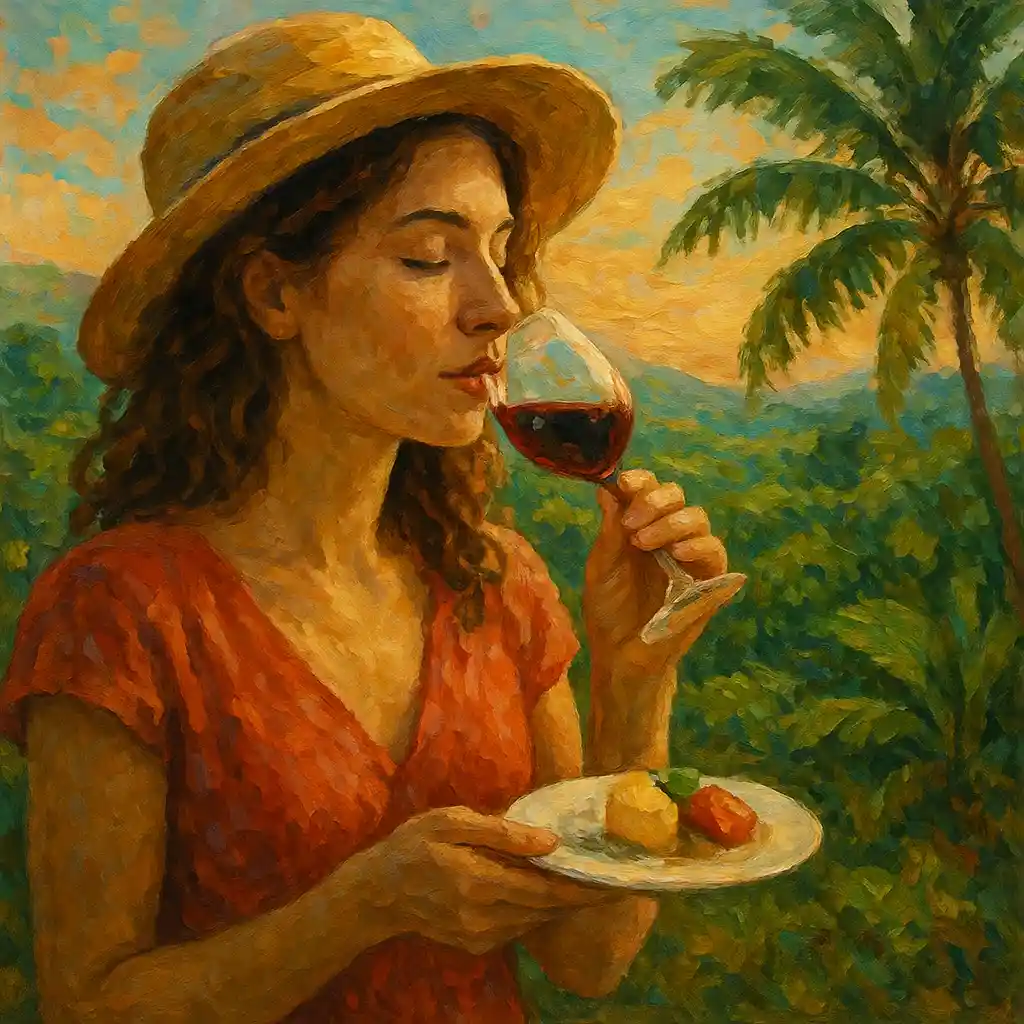
Food and wine tasting tips for women in Costa Rica can turn a simple meal into a meaningful travel memory. Imagine warm air on your skin, rainforest sounds in the background, and a table filled with fresh local flavors—then a sip of wine or a taste of coffee that helps you slow down and truly arrive. This guide is designed for women who want to explore Costa Rica through food and wine with confidence, cultural respect, sustainability, and personal growth in mind.
Every bite and every sip can be a connection: to the land, to the people who made it possible, and to the version of you that is brave enough to try something new.
Costa Rica’s culinary scene is built around fresh ingredients, local traditions, and a strong relationship with nature. While the country is more famous for coffee than wine, you can still enjoy thoughtful wine experiences—especially when you approach tastings with curiosity, good questions, and a mindful pace. The goal is not to “know everything,” but to feel comfortable, safe, and present while you explore.
Why Food and Wine Tasting Tips for Women in Costa Rica Matter
Travel tastes different when you give yourself permission to slow down. Many women travel with a mix of excitement and responsibility—planning details, staying alert, and making sure everything goes well. Using practical food and wine tasting tips for women in Costa Rica helps you relax into the experience while still making smart choices.
These tips also support:
- Sustainability: choosing local, seasonal food and reducing waste.
- Cultural respect: learning the meaning behind dishes and dining rituals.
- Personal growth: trying new flavors, practicing presence, and building confidence.
When you treat tastings as more than “just eating,” you create memories that stay with you long after the trip.
Understanding Costa Rican Cuisine Before You Taste
One of the best food and wine tasting tips for women in Costa Rica is simple: learn a little about the cuisine before you arrive at the table. You do not need to be an expert. Just knowing what is common helps you order with confidence and recognize local ingredients.
Traditional dishes and ingredients you’ll see often
Costa Rican food often feels comforting and fresh, with ingredients that are easy to recognize and enjoy. You may see:
- Gallo pinto: rice and beans, often served at breakfast.
- Casado: a classic plate that commonly includes rice, beans, plantains, salad, and a protein.
- Patacones: fried plantains, crispy and satisfying.
- Ceviche: a fresh, citrusy seafood dish often served chilled.
- Tropical fruits: mango, papaya, pineapple, and more—often very ripe and flavorful.
These foods are not just meals; they are part of daily life and community.
Fresh and locally sourced produce (and why it changes the taste)
Costa Rica is known for abundant produce, and many meals highlight what is grown nearby. A strong tip for mindful tasting is to notice how “alive” the ingredients feel—bright colors, clear aromas, and clean flavors.
If you want to align your choices with sustainability, look for places that emphasize local sourcing. Supporting small farmers and local producers helps communities and usually leads to fresher food on your plate.
The cultural meaning of food in Costa Rica
Food in Costa Rica is deeply connected to family, routine, and hospitality. Meals are often a time to gather, talk, and enjoy. When you approach food with patience and respect, you often receive warmth in return.
Try this small ritual before your first bite: pause, look at your plate, and notice one detail you appreciate (color, aroma, or texture). It helps you shift from “rushing” into “receiving.”
Exploring Costa Rican Wine with Confidence
Food and wine tasting tips for women in Costa Rica should include one honest reminder: Costa Rica is not globally famous for wine in the way some other countries are. Still, you can find enjoyable wine moments—especially in restaurants, curated tastings, and experiences led by people who love sharing flavor stories.
How to approach Costa Rican wine tastings with curiosity
The best mindset is openness. Instead of comparing every glass to what you know from home, focus on the experience in front of you: the setting, the pairing, the conversation, and what you personally enjoy.
One thing that helps is asking simple questions, such as:
- “What do you recommend with this dish?”
- “Is this wine lighter or fuller?”
- “What flavors should I look for?”
These questions invite guidance without pressure.
Sustainable practices in wine experiences
When you choose tastings, look for signs of care: thoughtful portions, respect for the environment, and a connection to local communities. Even small details—like reducing waste, using reusable glassware, or highlighting local ingredients in pairings—can reflect a more responsible approach.
Mindful tasting is also sustainable tasting: when you slow down, you waste less and appreciate more.
Preparing for Food and Wine Tasting Tips for Women in Costa Rica
A smooth tasting day often starts before you arrive. Preparation helps you feel calm, capable, and ready to enjoy. These food and wine tasting tips for women in Costa Rica focus on practical planning without taking the joy out of spontaneity.
Research and choose reputable places
Look for restaurants, tours, or tastings that match your values. Consider places that:
- Use local ingredients and seasonal menus
- Support local farmers or artisans
- Communicate clearly about what the experience includes
- Have staff who are happy to answer questions
If you are traveling solo, choosing well-reviewed, established places can also add peace of mind.
Reservations and dress codes
Some popular restaurants and tasting experiences require reservations, especially in high season. Booking ahead reduces stress and helps you plan your day.
Dress codes can vary. A simple approach is to pack one outfit that can move between casual and nicer settings:
- A comfortable dress or jumpsuit you can dress up with accessories
- Comfortable shoes that still look neat
- A light layer (some indoor spaces can feel cool)
Feeling appropriately dressed helps you relax and enjoy the experience without self-consciousness.
Transportation and safety for solo female travelers
Food and wine tasting tips for women in Costa Rica should always include transportation planning. If you will be tasting wine, plan a safe ride back. Also, consider these habits:
- Research safe transportation options in advance.
- Avoid walking alone at night in unfamiliar areas.
- Share your itinerary with a trusted contact.
- Keep emergency contacts accessible.
Your goal is not fear—your goal is freedom. When safety is handled, enjoyment becomes easier.
Essential Food and Wine Tasting Tips for Women in Costa Rica: Mindful Food Tasting
Here is where your experience becomes richer. Many people taste quickly without noticing much. With a few simple habits, you can remember meals more clearly and feel more connected to the place. These food and wine tasting tips for women in Costa Rica are designed to be easy and natural.
Engage all your senses: sight, smell, taste, and touch
Before you eat, take a moment to notice:
- Sight: colors, shapes, and presentation
- Smell: aromas before the first bite
- Taste: the main flavors and how they change
- Touch: texture, temperature, crunch, softness
Try this simple breathing cue before your first bite: inhale gently through your nose, pause, then exhale slowly. This small pause often makes flavors feel stronger and more detailed.
Proper tasting techniques for different dishes
You do not need formal rules, but a few techniques help:
- Start small: take a small bite first to understand the dish.
- Chew slowly: flavors often show up in layers.
- Notice the finish: what taste stays after you swallow?
- Reset your palate: sip water between different dishes.
If you are tasting multiple items, go from lighter flavors to stronger flavors when possible. This helps you notice more.
Pairing food with the right beverages
Pairing is not about being perfect. It is about balance and enjoyment. A few easy pairing ideas from the draft include:
- Crisp white wine with seafood ceviche: fresh with fresh.
- Bolder red wine with a hearty dish like steak: strong with strong.
- Acidic wines with acidic foods: a simple way to balance flavors.
- Sweet wine with spicy food: contrast can feel harmonious.
One of the most useful food and wine tasting tips for women in Costa Rica is to ask for pairing suggestions. Locals and staff often know what works well with regional ingredients.
Essential Food and Wine Tasting Tips for Women in Costa Rica: Wine Tasting Basics
Wine tasting can feel intimidating if you think you need the “right words.” You do not. You only need attention and honesty about what you like. These food and wine tasting tips for women in Costa Rica focus on simple steps you can repeat anywhere.
Appearance, aroma, taste, and finish
Use this easy four-step method:
- Appearance: look at the color and clarity.
- Aroma: smell the wine before sipping. Notice what it reminds you of (fruit, flowers, earth).
- Taste: take a small sip and let it sit on your tongue.
- Finish: notice what flavor stays after you swallow.
If you can describe a wine as “light,” “fresh,” “fruity,” “dry,” or “smooth,” you are doing it right.
Acidity, tannins, and body (in plain language)
These three ideas help you understand why you like a wine:
- Acidity: the “zesty” or “bright” feeling that can make your mouth water.
- Tannins: the dry, slightly puckering feeling (often in red wines).
- Body: how light or heavy the wine feels in your mouth (light and crisp vs. full and velvety).
Try this: take one sip and focus on only one thing—acidity, tannins, or body. Then take another sip and focus on a different one. This makes learning feel simple and fun.
Wine and food pairing tips to elevate flavor
To keep pairing easy, remember:
- Match intensity: light with light, bold with bold.
- Use acidity to refresh rich foods.
- Use contrast (sweet with spicy) when you want balance.
Most importantly, trust your own palate. Your preference matters more than any “rule.”
Navigating Dietary Restrictions During Tastings in Costa Rica
Food and wine tasting tips for women in Costa Rica should make space for real life: allergies, intolerances, and personal choices. With a little planning, you can enjoy Costa Rican food while staying true to your needs.
How to communicate dietary needs effectively in Spanish
Having a few phrases ready can remove stress. Here are examples from the draft:
- Sin gluten (gluten-free)
- Sin lácteos (dairy-free)
- Soy vegetariana (I’m vegetarian)
Say your needs clearly and kindly. Most places appreciate direct communication, especially when it helps them serve you well.
Vegetarian, vegan, and gluten-free options in Costa Rican cuisine
Many Costa Rican meals include rice, beans, plantains, vegetables, and fruit, which can work well for plant-based or gluten-free travelers (depending on preparation). A helpful strategy is to explore local markets where fresh produce is abundant and simple foods are easy to choose.
If you are unsure about ingredients, ask what is in the dish and how it is prepared. Staying curious is part of mindful travel.
Ask local chefs and sommeliers for recommendations
One of the most powerful food and wine tasting tips for women in Costa Rica is to ask experts what they love. Chefs, servers, and sommeliers can guide you toward dishes and pairings that match your diet and your comfort level. Often, the best meals are the ones you would not have found alone.
Food and Wine Tasting Tips for Women in Costa Rica: Cultural Etiquette
Cultural etiquette is not about being perfect. It is about showing respect and being willing to learn. When you honor local customs, your experiences often feel deeper and more welcoming.
Respect local customs during tastings
Approach tastings with patience and appreciation. Small actions can communicate respect:
- Say “gracias” and be kind to staff.
- Ask questions about dishes instead of judging what feels unfamiliar.
- Be mindful about waste and portion sizes.
Keeping a food and wine journal can also help you reflect on what you learned—not just what you ate.
Meal times and dining rituals in Costa Rica
Meals can be social and unhurried. Consider choosing at least one meal where you do not rush. Let it be a moment of rest and connection, not only a stop between activities.
Try this: put your phone away for the first five minutes of the meal. Notice how quickly your senses become sharper.
Engage with locals and learn culinary heritage
Some of the best travel memories come from simple conversations. If you feel comfortable, ask a food vendor or chef about:
- Where the ingredients come from
- How the dish is traditionally served
- What the meal means in their family or community
This is how food becomes more than flavor—it becomes story.
Sustainable Food and Wine Tourism in Costa Rica
Many women want their travels to reflect their values. These food and wine tasting tips for women in Costa Rica support conscious consumption without turning your trip into a checklist.
Support eco-friendly and socially responsible establishments
Look for places that show care through actions, such as:
- Local sourcing and seasonal menus
- Eco-friendly packaging choices
- Clear respect for community and workers
If you are not sure, simply ask: “Do you use local ingredients?” or “Do you have any sustainability practices?” The question alone can encourage positive change.
Minimize food waste and plastic use during tastings
Practical habits make a real difference:
- Bring reusable utensils or containers if it fits your travel style.
- Choose smaller portions or share dishes when possible.
- Take only what you will eat, especially at tasting-style experiences.
- Carry a reusable water bottle to reduce plastic.
These are small choices, but they add up—especially in places where nature is a central part of daily life.
Conscious consumption and biodiversity
Costa Rica is known for biodiversity, and your choices can support its preservation. When you buy food and drinks that are thoughtfully produced, you help protect the land and the traditions connected to it.
If you like to shop, look for ethical sourcing cues such as certifications mentioned in the draft (for example, Rainforest Alliance or Fair Trade) when they are available. Use them as helpful signals, not as the only measure of quality.
Enhancing Personal Growth Through Culinary Exploration
Food and wine tasting tips for women in Costa Rica are not only about flavor. They are also about confidence, reflection, and learning. When you try something new in a new place, you practice trust—in yourself and in the journey.
Reflect on the connection between food, culture, and identity
A meal can bring up memories, emotions, and surprises. You might discover that you love a flavor you never tried before, or that a simple dish makes you feel grounded. These moments can be small, but they matter.
Try this reflection after a memorable meal: What did I enjoy most—taste, setting, conversation, or the feeling of trying something new?
Keep a travel journal for tasting memories
A journal helps you remember details you might otherwise forget. You do not need long entries. Even a few lines can capture the moment:
- What you ate and drank
- Where you were
- One aroma or flavor you noticed
- How you felt in that moment
This is one of the simplest food and wine tasting tips for women in Costa Rica, and it often becomes a treasured keepsake.
Join cooking classes and cultural workshops
If you want to deepen your understanding, consider a cooking class or cultural workshop. Learning directly from locals can help you appreciate techniques, ingredients, and traditions in a hands-on way. Take notes, ask questions, and enjoy being a beginner—it is part of the growth.
Safety Tips for Women Traveling in Costa Rica (Especially Around Tastings)
Feeling safe supports enjoyment. These safety reminders are included because food and wine experiences often happen in the evening, in new neighborhoods, or with transportation needs.
Stay aware of your surroundings
It is easy to get distracted by beauty, music, and excitement. A gentle habit is to regularly check in with your environment—especially when you are using your phone, carrying a bag, or walking in a new area.
Avoid walking alone at night and choose reputable transportation
If you are going to dinner or a tasting, plan your ride ahead when possible. Choose reputable services, and do not hesitate to ask your hotel or host for advice. This is one of the most practical food and wine tasting tips for women in Costa Rica because it protects your peace of mind.
Secure belongings and stay in touch with trusted contacts
Consider simple safety habits:
- Use a secure wallet or bag that stays close to your body.
- Keep copies of important documents separate from originals.
- Share your plan with someone you trust.
- Carry a small list of emergency contacts.
These steps are not about worry. They are about supporting your independence.
Recap: Food and Wine Tasting Tips for Women in Costa Rica
To bring it all together, here are the key food and wine tasting tips for women in Costa Rica from this guide:
- Taste mindfully by engaging sight, smell, taste, and texture.
- Use simple wine tasting steps: appearance, aroma, taste, finish.
- Learn basic pairing ideas and ask for local recommendations.
- Plan ahead for reservations, dress codes, and safe transportation.
- Communicate dietary needs clearly (and learn a few Spanish phrases).
- Respect cultural etiquette and slow down at meals.
- Choose sustainable options and reduce waste where you can.
- Journal your tastings to deepen memory and personal growth.
Stepping out of your comfort zone does not need to feel risky. It can feel grounded, intentional, and joyful—one mindful bite at a time.
Costa Rica invites you to savor more than flavors: it invites you to savor the moment. Use these food and wine tasting tips for women in Costa Rica to explore with confidence, respect, and curiosity. When you’re ready, continue your journey by exploring more travel guides and mindful tasting ideas in our blog—your next delicious discovery is waiting.